Concord's housing is older, on average, than almost anywhere in Greater Boston, and the town's preservation culture shapes how bathrooms get renovated. Along Monument Street, Lexington Road, and Main Street, and through the neighborhoods around Concord Center and West Concord, houses run from First Period and Federal through Victorian, with substantial estate construction layered in over the past century.
In houses of that age the bathroom is always an insertion. It was carved out of a bedroom, a dressing room, a back hall, or a closet, generations after the frame went up, and two hundred years of settling means the opening you have to fill is not square, not plumb, and frequently not the same width at the top as at the bottom. Ceilings slope under the eaves. Old radiator lines and chimney chases interrupt walls. A stock enclosure ordered to a nominal size simply will not sit correctly in a room like that.
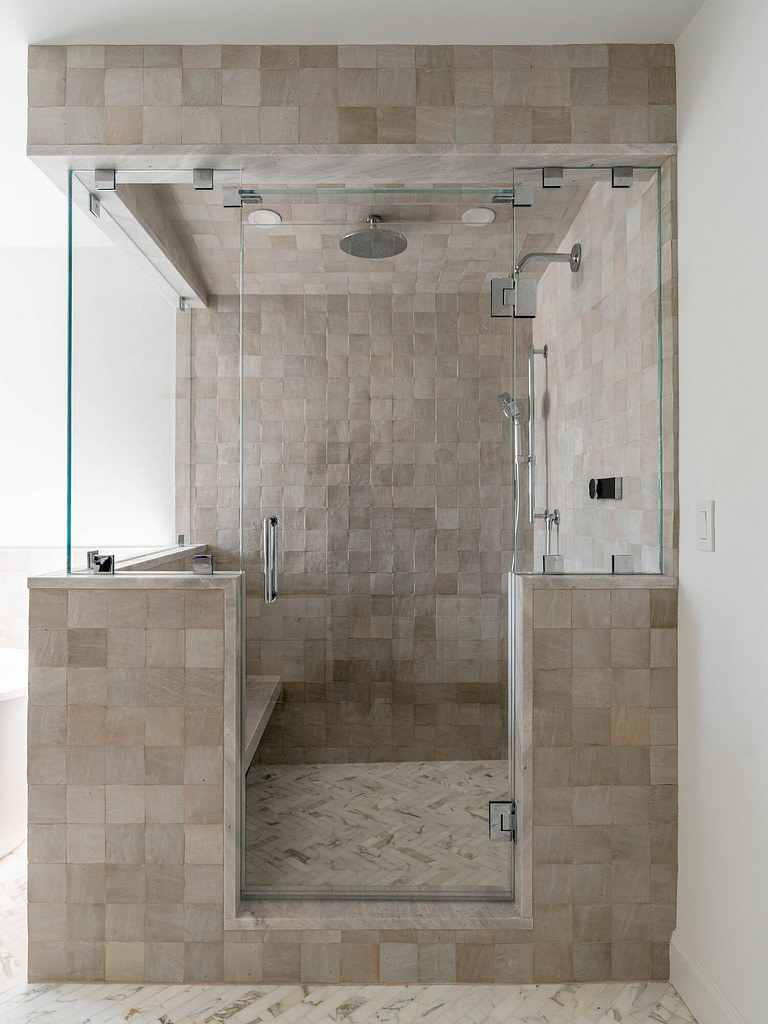
Custom fabrication is what resolves it. Every Oasis enclosure is measured in your home to 1/16" after the tile is complete, and the glass is cut to the geometry that actually exists — angled top cuts for a sloped ceiling, notches to clear a casing or a beam, and panels sized to the real taper of a leaning wall. That work is ordinary for us and effectively impossible with an off-the-shelf unit.
The other thing Concord projects tend to want is restraint. In a room with original millwork, period tile, or a restored clawfoot tub, the enclosure should recede rather than announce itself. Frameless glass with minimal hardware does that — the eye reads the room, not the shower door. Where the house calls for it, polished nickel, unlacquered brass, and oil-rubbed bronze sit correctly alongside period fixtures; matching an existing finish is far easier with the actual piece in hand than from a photograph.
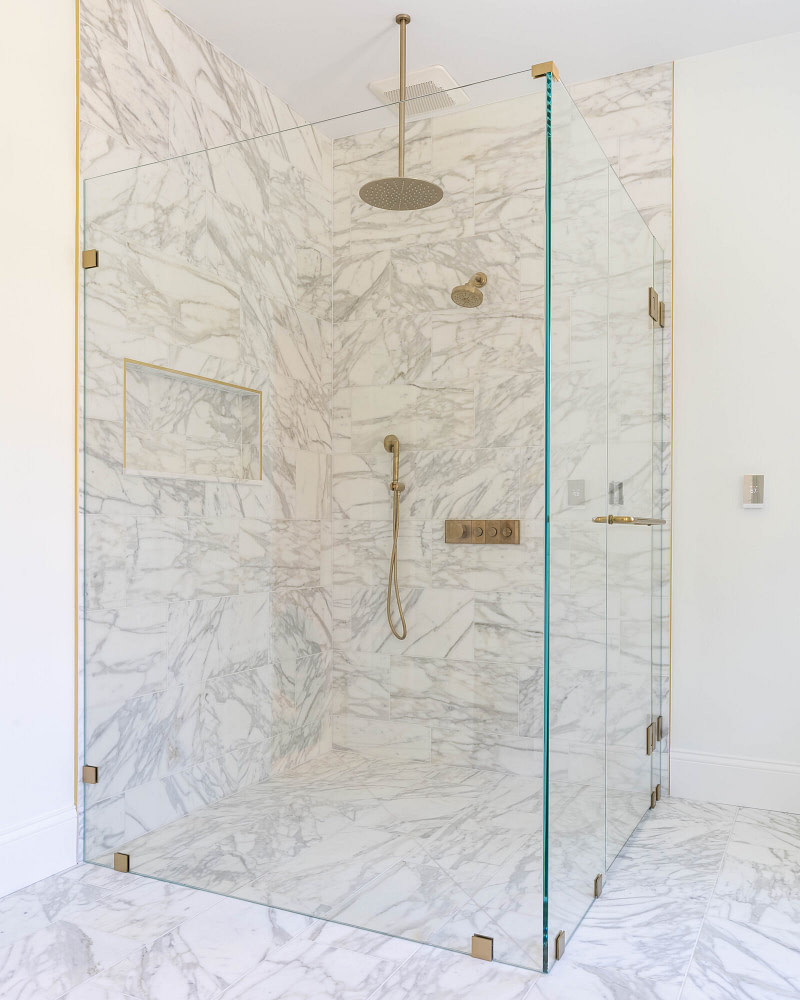
Concord's newer estate construction and full gut renovations go the other direction in scale, with large primary suites supporting wide walk-in enclosures, benches, and sometimes curbless entries. At those spans, 1/2" glass over 3/8" gives a long fixed run more rigidity and a large door a more solid swing. Low-iron ultra-clear glass comes up often where the tile is white marble or pale limestone.
Our Needham showroom at 33 Highland Ave is about 17 miles from Concord, roughly a 25-minute drive down Route 2 and Route 128. If you are working with a preservation-minded architect or builder, bringing them along tends to settle glass thickness and hardware in one visit.
Every Concord enclosure is measured, fabricated in Massachusetts, and installed by Oasis employees — never subcontractors — at a fixed quoted price covering the entire project.